
HERE ARE THE AREAS I COVER:
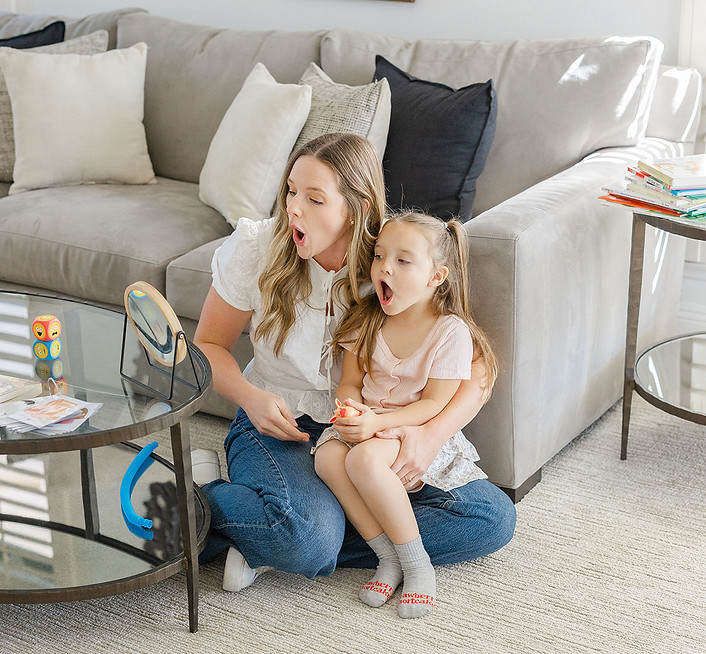
Your child knows what they want to say but others struggle to understand them.
-
Targeting specific sounds and error patterns affecting clarity
-
Building intelligibility in words, sentences, and real conversation
-
Supporting children in being understood by anyone, not just family
Articulation and phonological disorders are well understood clinically, and there is a clear path forward for most children.
Your child has fewer words than expected, struggles to follow directions, or has a hard time putting thoughts into sentences.
-
Identifying gaps in receptive and expressive language
-
Building vocabulary, sentence structure, and comprehension
-
Supporting communication at home, at school, and with peers
Language builds on itself, which is why understanding exactly what is happening is the most important first step.
Your toddler is not yet talking the way you expected and you are not sure whether to wait it out.
-
Evaluating whether development is typical or needs support
-
Identifying early signs of speech and language delay
-
Starting intervention while the brain is most responsive to language learning
Late talking can be typical development, and it can also be an early sign that a child needs support to get on track. The only way to know is to look closer.
Your child has plenty to say but friendships feel hard, conversations feel one-sided, or social situations leave them confused or on the outside.
-
Building conversational turn-taking and perspective-taking skills
-
Targeting social cue recognition, humor, and unspoken social rules
-
Supporting connection with peers in real, everyday settings
Social communication differences are often missed precisely because a child seems so verbal. A closer look at how they use language with others tells a fuller story.
Your child is bright but reading is genuinely hard and it is starting to affect their confidence at school.
-
Evaluating phonological awareness, the spoken-language foundation behind reading
-
Targeting decoding, sound blending, and early literacy skills
-
Supporting children flagged for dyslexia or falling behind despite strong effort
Reading struggles that begin in spoken language are often missed in traditional reading interventions. This is where a speech-language pathologist with literacy training fills a gap most families do not know exists.
Your child has so much they want to communicate but spoken words are not yet a reliable tool.
-
Evaluating the right AAC system for your child's specific needs and abilities
-
Supporting functional, meaningful communication right now
-
Building toward spoken language development alongside
AAC use
AAC is not a last resort. For many children it is the most important first step toward real communication.
Your child is clearly capable but consistently struggles in ways that do not add up at school or at home.
-
Targeting language processing, sequencing, and direction-following
-
Supporting organization of thoughts in writing and spoken communication
-
Addressing word retrieval, working memory, and language-based learning differences
These challenges are frequently attributed to attention or motivation before the language piece is ever evaluated. Getting the full picture changes what support actually looks like.
Your child has an ASD diagnosis and communication is one of the areas that needs focused, individualized attention.
-
Building functional language and expressive communication skills
-
Developing social communication and pragmatic language
-
Exploring AAC where spoken language needs additional support
A diagnosis is a starting point, not a ceiling. Therapy here is built around your child, not a program.